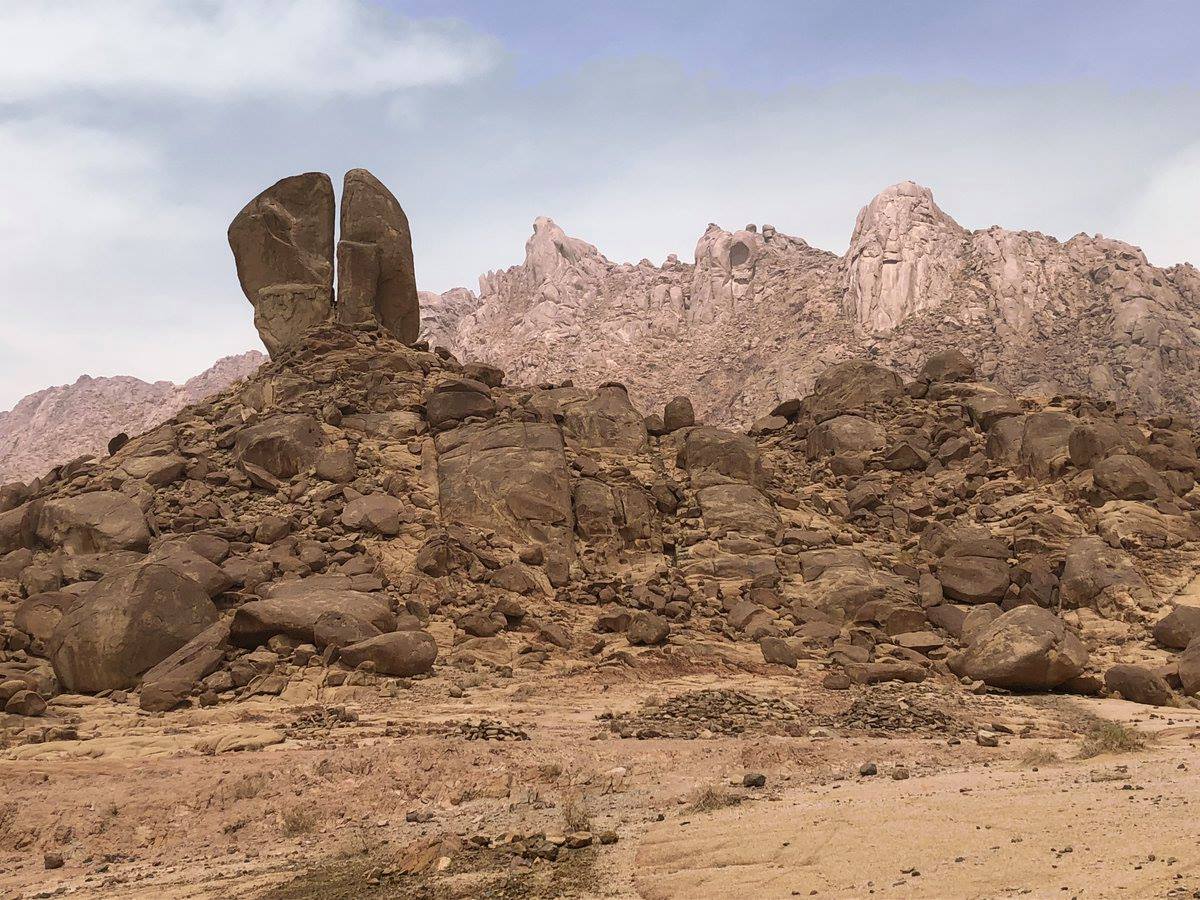
When did the Church begin? Most Christians instinctively answer: on the day of Pentecost as Acts 2 shows us. But what if Scripture itself tells a deeper story?
In a recent KNGDM Alliance teaching session, I explored a foundational question for restorationist theology: Did the ekklesia begin in the New Testament — or does it reach back to Sinai?
🎥 Watch the full teaching session here:
The Church in the Wilderness
Stephen makes a remarkable statement in Acts 7:
“This is the one who was in the congregation in the wilderness…”
Acts 7:38 (ESV)
The Greek word translated “congregation” is ekklesia. Stephen calls Israel at Mount Sinai… the ekklesia. That alone should make us pause.
If Israel at Sinai is called the ekklesia, then: 1) the Church did not begin in Acts 2; 2) the Church did not replace Israel; 3) the New Testament did not invent a new people of God besides Israel. Instead, the apostles recognized something much older, something rooted in the Torah itself.
Moses repeatedly refers to Sinai as “the day of the assembly” (Deut. 4:10). The Hebrew word qahal is used — the gathered assembly of Israel. In the Greek translation of the Old Testament (the Septuagint), that word becomes… [drum roll]… the ekklesia.
Israel gathering at Mount Sinai is the first great ekklesia moment in their history.

Formed as a Priestly People
At Sinai, Israel was not merely given commandments. They were constituted as a people:
“You shall be my treasured possession among all peoples… and you shall be to me a kingdom of priests and a holy nation.”
Exodus 19:5-6 (ESV)
Israel was formed as a nation of worshipers and priests, and they were called to be a light to the nations
When Stephen calls that moment an ekklesia moment, he is telling us something crucial: Sinai is not background history. It is the foundation of what we now know as the Church.
Jesus Builds — He Does Not Replace
When Jesus says in Matthew:
“I will build my ekklesia and the gates of Hades will not prevail against it.”
Matthew 16:18
… he is not announcing the creation of a brand-new entity disconnected from Israel.
He is gathering, restoring, and reconstituting God’s covenant people around himself — as Israel’s true Messiah and the faithful Son of David.
He comes to Israel. He renews Israel. Through restored Israel, God’s purposes flow outward to the nations.
The word “build” matters (Greek: oikodomeo). Jesus does not say “I will invent” or “I will replace.” He speaks as a king restoring a people, as a shepherd regathering a flock, as the Son of David rebuilding the fallen tent of his forefather (cf. Amos 9:11; Acts 15:16).

Pentecost Is Sinai Renewed
Acts 2 is not the birth of a different people; it is the renewal of the same covenant people, the people of Israel, now regathered around the risen Messiah and empowered by the Holy Spirit.
Luke deliberately frames the events of Pentecost in ways that echo Mount Sinai. Just as fire descended on the mountain when God revealed himself to Israel, so tongues of fire appear over the gathered disciples. Just as God’s voice was heard at Sinai, so divine speech is heard again — this time not in one language, but in many as the disciples go out into the streets of Jerusalem. The God who once formed Israel into his covenant people at Sinai is now renewing that same people through the outpouring of his Spirit.
The parallels deepen when we consider the striking numerical contrast. At Sinai, after the sin of the golden calf, about 3,000 people died because of rebellion (Exod. 32:28). At Pentecost, about 3,000 are brought to life through repentance and faith (Acts 2:41). What once marked judgment now becomes a sign of restoration. Where the letter condemned, the Spirit gives life. The covenant is not discarded. It is internalized and empowered.
A people is once again shaped by the manifest presence of God. What’s significant is that the Spirit is poured out first on Jewish believers in Jerusalem. This is not incidental. Restoration begins with Israel. The promises are fulfilled in the very city where the Messiah was rejected and raised. From that restored center — the City of the Great King — the blessing begins to flow outward.
The connection becomes even clearer when we remember that Pentecost is the Greek name for Shavuot, the feast that commemorates the giving of the Torah at Sinai. On the very day Israel celebrated receiving the Law written on stone tablets, God acts again — this time writing his Law on human hearts. What Jeremiah foresaw begins to unfold: “I will put my law within them, and I will write it on their hearts” (Jer. 31:33). What happened on Mount Sinai is not replaced. It is fulfilled on another mountain, Mount Zion in Jerusalem. The same covenant purposes are now brought to life by the Spirit, and God’s own people are renewed from within.
Pentecost, then, is not the establishment of a Gentile institution. It is faithful Israel restored in Messiah — the southern kingdom of Judah and the northern kingdom of Samaria — and from that restored Israel the light begins to shine to the nations.

How the Nations Are Included
So where do Gentiles fit in? Paul answers this plainly in Ephesians 2:
“Remember that you were at that time separated… alienated from the commonwealth of Israel… But now in Christ Jesus you who once were far off have been brought near.”
Ephesians 2:12-13 (ESV)
Gentiles are not made into a new Israel instead of ethnic Israel. They are brought near to Israel’s covenants in Messiah. Or as Paul describes in Romans 11:
“You… were grafted in… and now share in the nourishing root.”
Romans 11:17
Inclusion happens by extension, not by replacement. This is the heart of restorationist theology, the theology that we are fleshing out at KNGDM Alliance together with friends from Tikkun Global and other voices like Joel Richardson.
Why This Matters
If the ekklesia is faithful Israel restored in Messiah and extended to the nations, then the Church is not: 1) a Gentile institution; 2) a break from Israel’s story; 3) God’s plan B (God does not have a plan B!).
The Church is the same ekklesia of God, which is Israel gathered and renewed in Messiah and extended to include believers from the nations.
This reshapes everything: how we read Scripture, how we pray for Israel, how we understand missions, and how we live as a priestly people in the world. It also reshapes how we see the future — because restoration begins with Israel’s renewal and culminates in the full manifestation of the Kingdom with its capital on Mount Zion in Jerusalem, the City of the Great King.

Go Deeper: All Things Restored
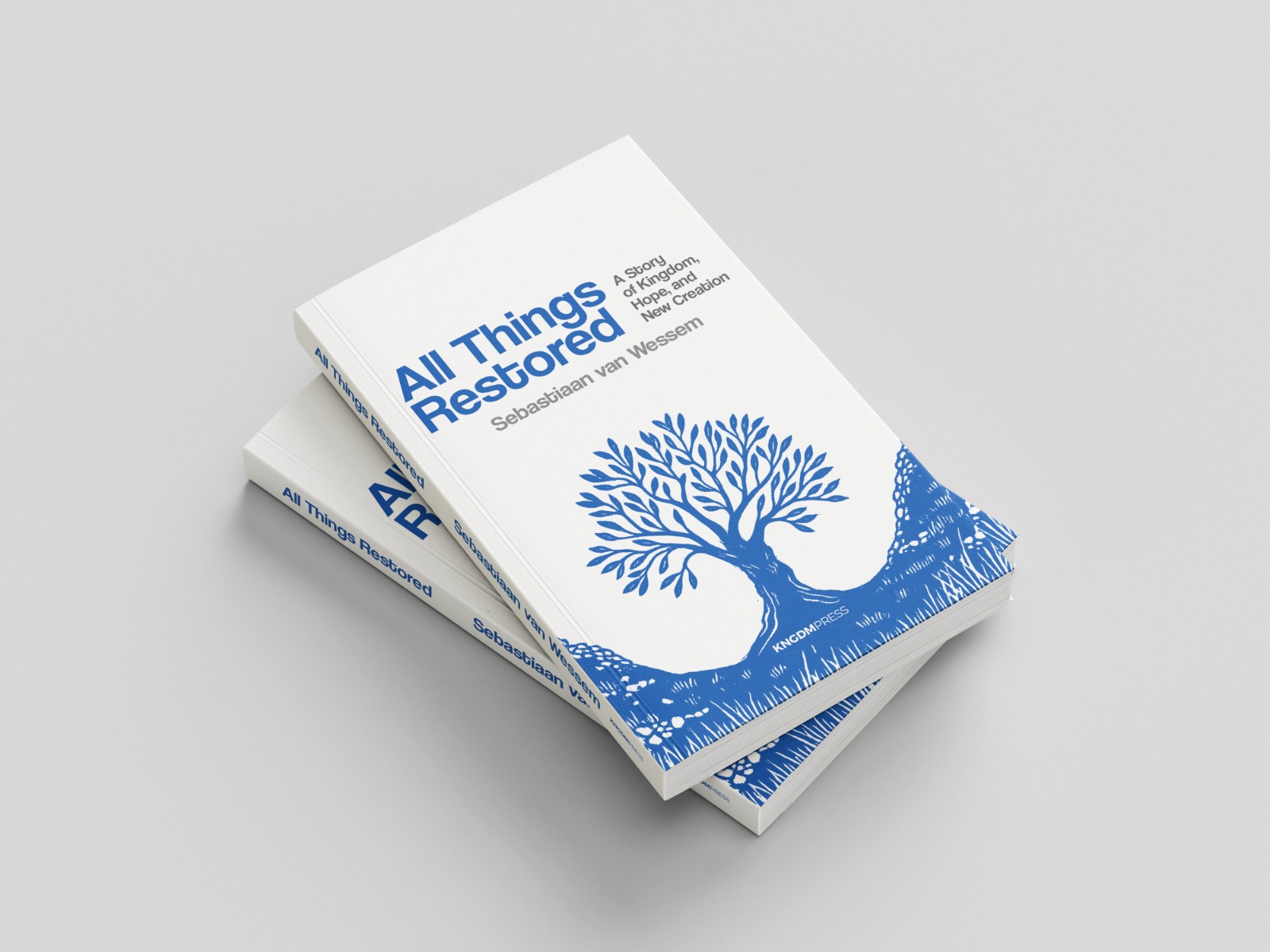
This teaching is one small window into the larger theological framework I unpack in my book All Things Restored. The book traces the biblical storyline from:
Creation ➝ Covenant ➝ Messiah ➝ Kingdom ➝ Consummation
At its heart is this conviction: God is not abandoning Israel. He is restoring Israel. And through restored Israel, he is gathering the nations.
If this vision resonates with you, I encourage you to get a copy of All Things Restored and explore the full restorationist framework in depth.
The ekklesia did not replace Israel. It is faithful Israel restored in Messiah and extended to include believers from the nations — so that together we might be a light to the world and prepare people for the coming great Day of the Lord.
Let’s recover the story — together!



Leave a Reply