
A worship song can disciple a church faster than a sermon. Not because it’s “deeper,” but because it’s repeatable. People don’t usually memorize a 35-minute message (or 45 minutes in my case 😅). They will memorize a chorus — week after week, car ride after car ride — until it settles deep in memory and begins to shape how they think and believe. Melody gives language a home in the heart.
That’s why theological drift so often enters the church through worship songs: sung doctrine bypasses our filters. Error sung takes deeper roots than error taught.


A contemporary illustration: Ik ben geen zondaar
Doorbrekers Worship’s song Ik ben geen zondaar contains lines that sound bold and liberating — but also flatten a crucial biblical tension. Here is a short excerpt (as published in their chord chart):
“Of ik nu val / Of ik nu sta / Ik ben geen zondaar”
A direct translation:
“Whether I fall or whether I stand, I am not a sinner.”
That’s not a minor nuance. It’s a theological claim. Yes, believers are truly justified. Yes, we are a new creation. Yes, sin no longer reigns. But the New Testament also insists that until our bodies are glorified, believers live in an already / not yet reality: saints will still battle the flesh, the world, and the devil.
John is crystal clear:
“If we say we have no sin,
we deceive ourselves,
and the truth is not in us.”
(1 John 1:8 ESV)
So when a worship line effectively teaches “even when I fall, I am not a sinner”, this goes way beyond our identity as a new creation in Messiah. People will pick up from this song that ongoing confession and cleansing are no longer needed. The song trains people to deny precisely what the apostles tell us to practice: walking in the light through honesty, confession, and restoration (1 John 1:7-9).
This is how unbalanced or even false theology creeps in: not by denying grace, but by denying this tension. It sounds victorious, but it subtly undermines:
- confession (“why confess what I no longer have?”)
- repentance (“repentance feels like unbelief”)
- pastoral honesty (“struggle becomes shameful and isolating”)
- the church’s healing culture (“light is replaced by performance”)
In other words: the “not yet” gets silenced, and with it the very pathway Scripture gives for restoration and wholeness.

This isn’t new: Arius sang his theology
This is not just a modern problem. Church history gives us a sobering precedent. In the fourth century, Arius did not primarily spread his heretical teaching — that the Son was not eternal and therefore not truly God — through dense theological treatises. He composed a work known as the Thalia, deliberately written in a popular, singable style. According to his opponents, these songs circulated widely among ordinary people — on streets, in homes, and in marketplaces.
Athanasius, Arius’ chief theological opponent, explicitly mocks the tune of the Thalia in his refutations. That detail matters. Arius understood something many still underestimate: melody makes doctrine portable.
One of the most famous Arian slogans — “there was when he was not” — is not a later caricature of his teaching. It appears repeatedly in early anti-Arian sources as a faithful summary of what Arius taught, and had his followers sing. His theology was reduced to short, memorable lines that people could easily repeat and internalize.
We even possess fragments preserved by Athanasius that reveal the songlike contrasts Arius employed, such as:
“We praise him [God the Father] as without beginning… because of him [Jesus] who has a beginning.”
That is precisely the danger. Catchy lines compress complex theology into memorable slogans, and once sung, they no longer invite examination. They settle into the imagination as assumed truth.
The early church recognized the threat immediately. Error set to music spreads faster, lasts longer, and resists correction far more effectively than error preached.

Why this matters for the church now
When worship lyrics like Ik ben geen zondaar teach a simplified victory narrative that leaves little room for the apostolic pattern — bringing sin into the light through confession, leading to cleansing and restoration — they don’t just “encourage people.” They catechize them into a framework that conflicts with the New Testament’s pastoral realism.
The tragedy is that the Bible’s already / not yet doesn’t weaken assurance — it protects it. It lets believers say, with full confidence: I am truly forgiven and made holy in Messiah, and I still bring my sin into the light, because cleansing is real, and forgiveness and restoration is promised.
That is not defeatist. That is first-century discipleship.
Conclusion: the challenge
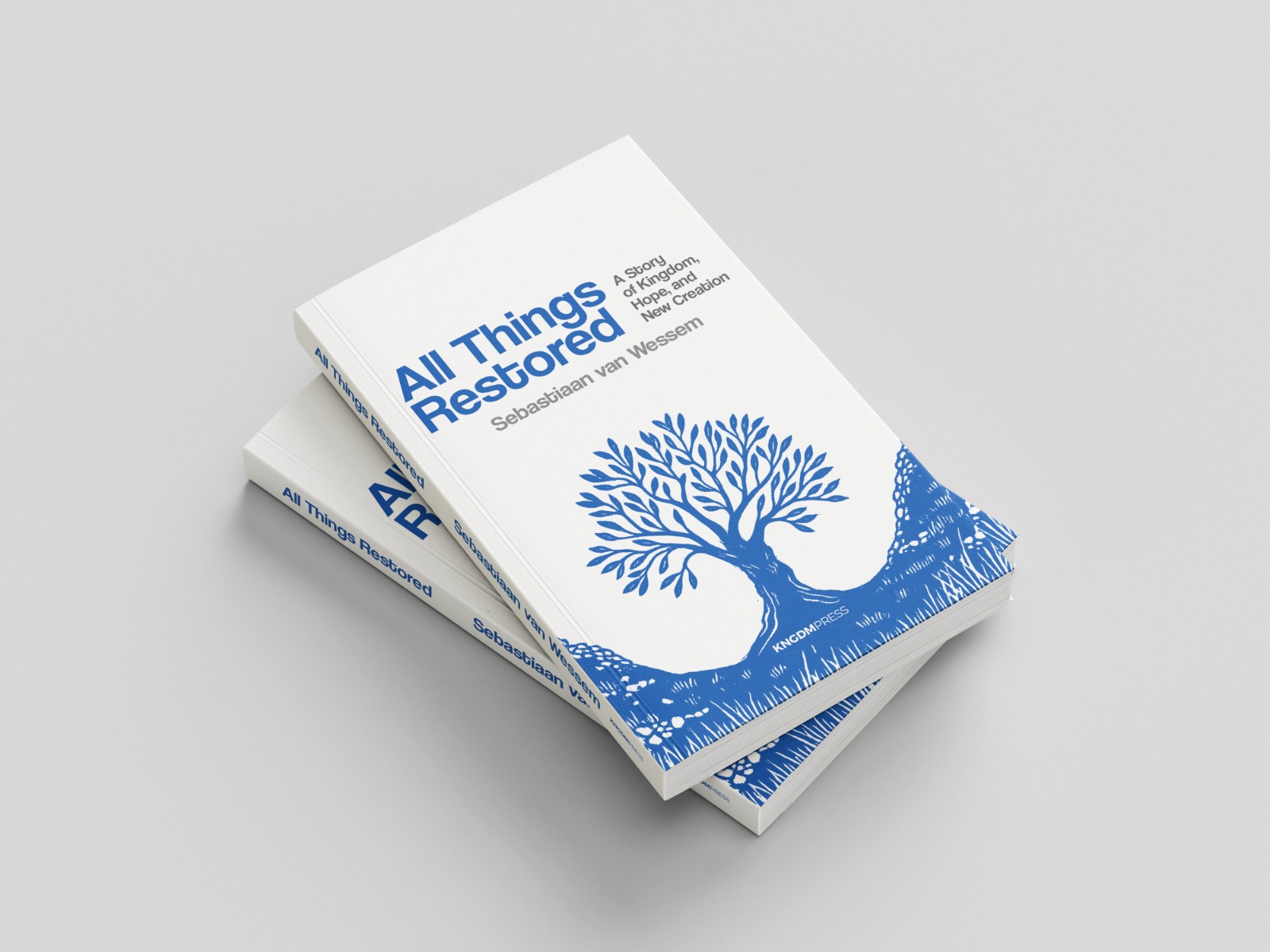
As I bring my book All Things Restored into the world, I am inviting the church back into a deeply biblical, first-century way of seeing the story — covenant, Messiah, Spirit, holiness, community, and hope that is both present and future.
So here is my challenge to the worship movement: who is with me in giving the first-century, apostolic gospel of the Kingdom a voice the church can no longer avoid singing?

Featured image by Олег Мороз on Unsplash.


Leave a Reply