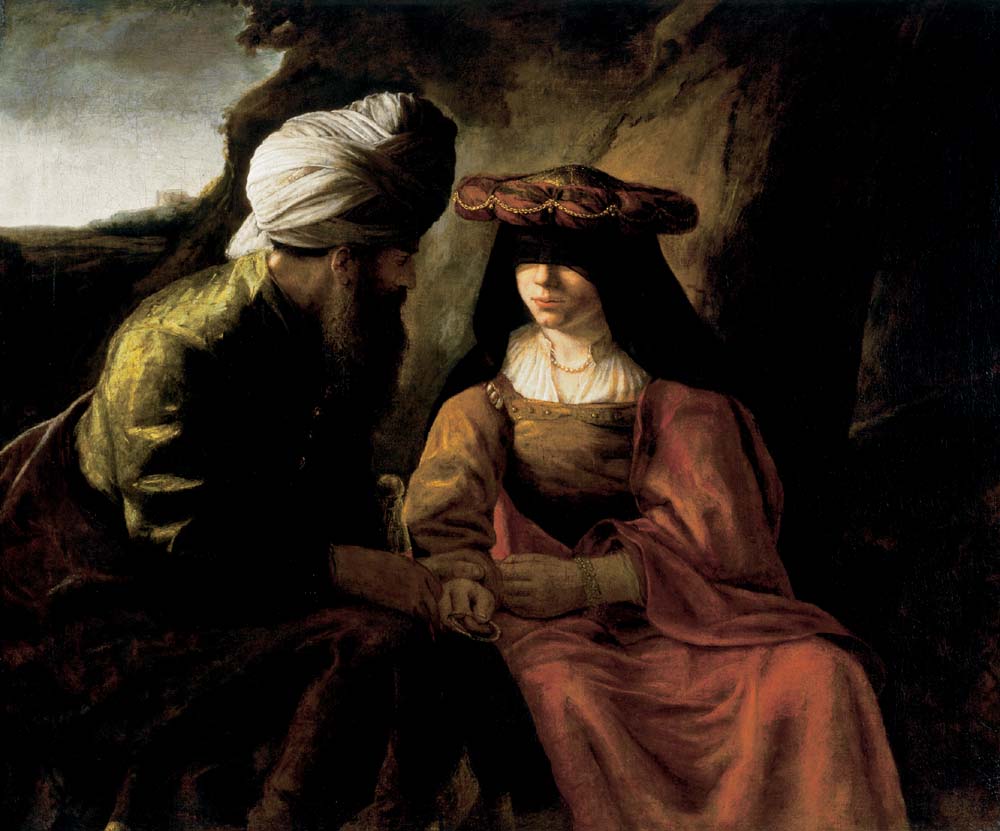
Genesis 38 tells the story of Judah, one of the twelve sons of Jacob — the same Judah from whom the tribe of Judah would later come. This matters, because Judah’s family line is the royal line in Israel. Kings will come from him. And eventually, Messiah. But at this point in the story, Judah does not look like a spiritual hero.
Judah marries a Canaanite woman and has three sons: Er, Onan, and Shelah. Judah arranges a marriage between his firstborn son Er and a woman named Tamar. Scripture tells us that Er was wicked, and the Lord put him to death (Gen. 38:7). Tamar is suddenly left a widow, vulnerable and without protection.
According to the customs of the time, the responsibility to care for Tamar and continue the family line fell to Onan, Judah’s second son. Onan, however, refuses this responsibility. He exploits Tamar while deliberately preventing her from having a child, and he too dies under God’s judgment (Gen. 38:8-10).
Judah now has one remaining son, Shelah. Afraid that he too might die, Judah sends Tamar away, promising she will be given to Shelah when he grows up. But Judah never intends to keep that promise. Tamar is left waiting — childless, powerless, and forgotten.

Years later, after Judah’s wife dies, Tamar realizes she has been abandoned. In an act of desperation, she disguises herself as a prostitute. When Judah sees her, he does not recognize her and sleeps with her. Tamar becomes pregnant.
When Judah later hears that Tamar is pregnant, he hypocritically calls for her punishment — until Tamar produces the personal items Judah left with her as a pledge to pay her for her services later. Judah is exposed. Confronted with the truth, he says words that mark a turning point: “She is more righteous than I” (Gen. 38:26).
Tamar gives birth to twins, Perez and Zerah. Perez becomes the key figure. From Perez’s line will come King David — and generations later, Messiah Jesus (Matt. 1:3).
The point of this story is not to justify anyone’s sin. Judah makes sinful choices. Tamar’s actions arise from injustice and desperation. God does not cause their failure. But Genesis 38 shows us something profound: our human brokenness does not hinder God’s redemptive purposes.
Judah’s line is preserved not because of his moral strength, but because of God’s faithfulness. Tamar, a marginalized woman, becomes an essential link in the story of redemption. What looks like a moral disaster becomes a doorway for grace.
This is how God works — not by denying the mess, but by working through it and redeeming it.
So when you read Genesis 38, don’t rush past it. Let it speak hope. If God can bring Messiah out of Judah’s failure and Tamar’s suffering, then your story, too, is not beyond redemption. God is still writing. And grace still has the final word.
Scholarly Note: Levirate Marriage (Genesis 38)
Levirate marriage refers to an ancient Israelite family obligation in which a man was expected to marry the widow of his deceased brother if the brother died without a son. The purpose was not romantic, but covenantal and social: to preserve the family line, protect the widow, and keep the inheritance within the clan.
The term comes from the Latin levir, meaning “brother-in-law.” In Israel, this practice is later codified in the Torah (Deut. 25:5-10), but Genesis 38 shows that it already functioned as a recognized custom before the Law of Moses was given.
In this system, the first son born from the union would be legally counted as the deceased brother’s heir, not the biological father’s. This ensured continuity of the family name and safeguarded the widow from poverty, social marginalization, and exploitation.
Onan’s sin in Genesis 38 is therefore not merely sexual misconduct, but a refusal of covenant responsibility. He takes the benefits of the relationship while deliberately denying Tamar her legal and social protection. His actions undermine both justice and family loyalty, which explains the severity of the biblical judgment.
Judah’s later failure lies in withholding his third son, Shelah, from Tamar, effectively leaving her in permanent limbo—neither free to remarry nor protected within the family. Tamar’s desperate actions must be read against this background of prolonged injustice.
Genesis 38 thus uses levirate marriage to expose a deeper issue: the breakdown of covenant faithfulness. Yet even here, God works through human failure to preserve the messianic line. The practice, though culturally distant, highlights enduring biblical concerns for justice, responsibility, and the protection of the vulnerable.
In short: levirate marriage was a means by which God’s covenantal concern for life, legacy, and the vulnerable was worked out in the everyday realities of Israel’s family life—even when people failed to live up to it.
Featured image: painting by School of Rembrandt. – residenzgalerie.at, Public Domain.


Leave a Reply