
Most churches do not think of themselves as eschatological communities. In fact, many rarely use the word eschatology at all. Yet every church lives from a particular vision of the future — whether it is articulated or not — and that vision quietly shapes how people pray, lead, suffer, hope, and persevere.
Eschatology is simply the Christian way of speaking about where the story of God, the world, and the Church is heading. It is not only about timelines or end-time events, but about what we believe God is ultimately doing with creation, humanity, and those who live lives surrendered to him. And because we live toward what we believe is coming, our understanding of the future inevitably shapes how we live in the present.
Every Church is an Eschatological Community
In that sense, every church is an eschatological community. Week by week, we are being formed by what we expect God to do next. Our preaching and prayers, our sense of urgency or patience, our understanding of suffering and hope, are all influenced — often unconsciously — by the future we imagine.
The question, then, is not whether eschatology matters, but what kind of people our eschatology is forming us to become. Our expectations about the end shape our discipleship far more than we often realize. They influence how we understand power and weakness, health and sickness, mission and faithfulness, perseverance and hope. In that sense, eschatology is never neutral. It quietly forms the kind of people we are becoming.

Other Common End-Time Frameworks
There are several eschatological frameworks that shape contemporary Christian life, especially within charismatic and evangelical contexts. They differ not only in how they interpret Scripture, but in how they shape vision, ministry, and discipleship at the local church level. A few of the most common ones are worth naming briefly before focusing on two that will be contrasted more closely in this post — the Revival-Rapture framework and the Restorationist framework.
Postmillennial Revivalism
Emphasizes cultural transformation and increasing kingdom influence before Jesus’ return. Within this framework, revival is often understood as preparing the way for the coming of the Messiah, with the expectation that the kingdom will be largely established, ordered, and ready for him to reign. Often associated with Bethel Redding-influenced charismatic theology and worship culture, this vision shapes churches toward leadership development, creativity, cultural engagement, and influence across society.
Preterist-Leaning Frameworks
Understand many end-time passages as already fulfilled, particularly in the events surrounding the destruction of Jerusalem in AD 70. In some expressions, this leads to a reduced emphasis on future eschatological expectation; in others, more radical forms of preterism hold that Jesus has already returned in a non-physical or “spiritual” sense. In practice, this often shifts the focus of church life from watchfulness and expectation toward present ethical living, spiritual formation, or social engagement.
Classic Dispensational Frameworks
Anticipate increasing moral and spiritual decline in the world leading up to the end, with limited expectation of widespread revival or cultural renewal before Jesus’ return. Within this framework, mission and evangelism remain central, yet the broader trajectory of history is often understood in terms of decline rather than restoration. In practice, this can foster a pessimistic or even defeatist posture toward culture, leading to a focus on preservation—faithfully holding to truth and personal holiness—rather than long-term engagement aimed at societal transformation.
Each of these frameworks shapes church life in distinct ways and deserves fuller treatment elsewhere.

Contrasting the Revival–Rapture Framework with a Restorationist Framework
In this post, I will focus primarily on two broad frameworks — the Revival–Rapture framework and the Restorationist framework, which I personally hold. Both affirm Jesus as King and anticipate his return, yet they form very different kinds of disciples. While the Revival–Rapture framework is still very influential in Pentecostal and charismatic contexts, a growing number of leaders and communities are exploring a Restorationist framework as they wrestle afresh with Scripture, the biblical story of restoration, and the tension between revival, suffering, and faithful witness in a changing world.
While I do believe in an end-time outpouring of the Spirit — a revival like we have never experienced before — the Restorationist framework understands this revival as occurring alongside a period of tribulation the Church will also experience, rather than as a final triumph immediately preceding the Church’s removal from the earth.
The Revival-Rapture framework
The Revival–Rapture framework assumes that the Church’s primary end-time calling is to experience and steward revival before Jesus returns. The future is approached with urgency and expectation, shaped by a strong sense that God intends to act powerfully now.
Within this framework:
- Revival is understood as a climactic, accelerating work of God
- The Church anticipates being removed before the darkest period of judgment
- Emphasis is placed on breakthrough, impact, harvest, and momentum
- Suffering is acknowledged, but often treated as temporary, exceptional, or abnormal
The rapture itself may not be emphasized or frequently taught, yet it often functions as a background assumption: the Church will not remain through prolonged tribulation. This assumption quietly shapes the emotional and spiritual posture of the community, even when it is not stated explicitly.
At its best, this framework fosters expectation, bold prayer, evangelistic urgency, and a strong confidence in the power of the Holy Spirit. At its weakest, it can drift toward triumphalism, impatience with weakness, and an underdeveloped theology of endurance.
The Restorationist Framework
The Restorationist framework understands the story of Scripture as moving toward the “restoration of all things” under the reign of Messiah (Acts 3:21). The Church is not waiting to escape the story, but to participate faithfully in it until its completion.
In this framework:
- The Church’s calling is to bear witness to the kingdom amid resistance
- Suffering is not an interruption, but a formative reality
- The Holy Spirit empowers faithfulness, not escape
- Israel and the nations are being restored within one unfolding purpose
- Hope is anchored in resurrection and renewal, not removal
Rather than asking how the Church can avoid tribulation, this framework asks how the Church is being prepared to remain faithful through it. Glory comes through suffering, not instead of it. The return of the Messiah is the climax—not the Church’s exit.
This framework tends to produce resilient disciples, churches shaped by covenantal faithfulness, and a hope grounded not in quick outcomes, but in God’s faithfulness across generations.
Revival–Rapture vs. Restorationist Frameworks (At a Glance)
These frameworks do not merely differ in how they interpret the end of the story. They differ in what they train people to expect, endure, and embody in the present. Each carries pastoral strengths—and each carries formative risks—depending on the season the Church finds itself in.
| Theme | Revival–Rapture Framework | Restorationist Framework |
|---|---|---|
| Story of Scripture | History accelerates toward revival and the Church’s removal | History moves toward the restoration of all things |
| End-Time Expectation | Revival precedes rapture | Revival accompanies faithful endurance |
| Role of the Church | Steward a final harvest before departure | Bear witness until the Messiah returns |
| View of Suffering | A challenge to overcome or shorten | A formative reality to endure faithfully |
| Work of the Spirit | Empowers impact, momentum, and breakthrough | Sustains witness, faithfulness, and hope |
| Kingdom Vision | Power increasingly visible in the present | Kingdom present but contested until its fullness |
| Israel & the Nations | Often treated as parallel or future-focused | Being restored within one unfolding purpose |
| Eschatological Hope | Escape followed by reward | Resurrection followed by renewal |
| Leadership Culture | Highly charismatic, personality-driven, and momentum-oriented leadership | Shared, accountable, and endurance-formed leadership |
| Leadership Emphasis | Anointing, visibility, catalytic gifting | Faithfulness, character, tested maturity |
| Discipleship Outcome | Urgency, expectancy, activation | Perseverance, faithfulness, long obedience |
Leadership culture is often where eschatology becomes most visible, as expectations about revival, suffering, and endurance shape what kinds of leaders are celebrated and reproduced.

Diagnostic Questions: What Is Our End-Time Vision Producing?
Before asking which framework is “right,” it is worth asking a more practical question: what does our eschatology actually train our people for?
Below are several important themes with questions that help us diagnose which story we are implicitly telling — even when we do not realize it.
1. Orientation Toward the Future
What future are people being prepared to face?
- Are they being trained to expect escalation and escape or faithfulness until the end?
- Is the horizon framed as “when Jesus takes us out of here,” or “until Jesus returns”?
- Is the goal being taken away or being found faithful?
Eschatology is revealed not by the slogans we repeat but by the expectations we instill in our people.
2. Theology of Suffering
How is suffering interpreted?
- Is suffering seen primarily as a problem to be solved or a context in which faith is formed?
- Are weakness and loss treated as unusual or as part of normal Christian life?
- When prayers go unanswered are people disoriented or deepened?
Scripture consistently frames endurance as essential to the people of God. Any theological system that does not make room for suffering suffering will eventually struggle to form mature disciples.
3. Role of the Holy Spirit
What does the Spirit prepare us for?
- Are spiritual gifts primarily oriented toward acceleration and visibility of a ministry or toward sustaining witness?
- Are manifestations seen as God’s approval or understood as signs of the age to come?
- Is discernment rooted in biblical testing or in what seems anointed or effective?
In the New Testament, the Spirit empowers the Church to remain faithful in witness under pressure, not to escape it.
4. Understanding of the Kingdom
How is the kingdom imagined in the present age?
- Is the kingdom described as advancing triumphantly now or growing amid resistance, often away from the public eye?
- Is opposition seen mainly as an obstacle to eliminate or as the setting in which faithful witness is lived out and tested?
- Is victory assumed in the present or awaited at the appearing of the King?
The difference between triumphalism and hope is often found here.
5. Israel and the Nations
Where does Israel belong in the story?
- Is Israel only affirmed in principle or integrated into the Church’s understanding of its own identity and calling?
- Are Jewish and Gentile believers seen as running on parallel tracks, or as one restored people with distinct callings?
- Is unity understood as a present witness that anticipates the age to come?
How a church understands Israel often shows whether it expects restoration only in the future or already unfolding in the present.
6. Leadership and Formation
What kind of leaders does this framework produce?
- Leaders shaped primarily by visibility or by endurance?
- Authority grounded in anointing alone or in tested faithfulness?
- Is success the primary validator or obedience?
The kind of future we expect determines the kind of leaders we celebrate.
A Closing Reflection
Every church is preparing its people for something. The question is not whether we have an eschatology, but what kind of faithfulness our eschatology—even when unspoken—is training us for.
A church that forms people mainly for breakthrough may find them unprepared for perseverance. A church that forms people for faithful witness equips them to endure—even when persecution comes or revival tarries.
The New Testament consistently directs the people of God toward patient faithfulness, costly witness, and resilient hope, anchored in the promise that Messiah will return and restore all things.
That future does not call us to escape the world when tribulation comes, but to remain faithful within it.
A shortened version of this article was also published in Dutch on Cvandaag on January 12, 2026.
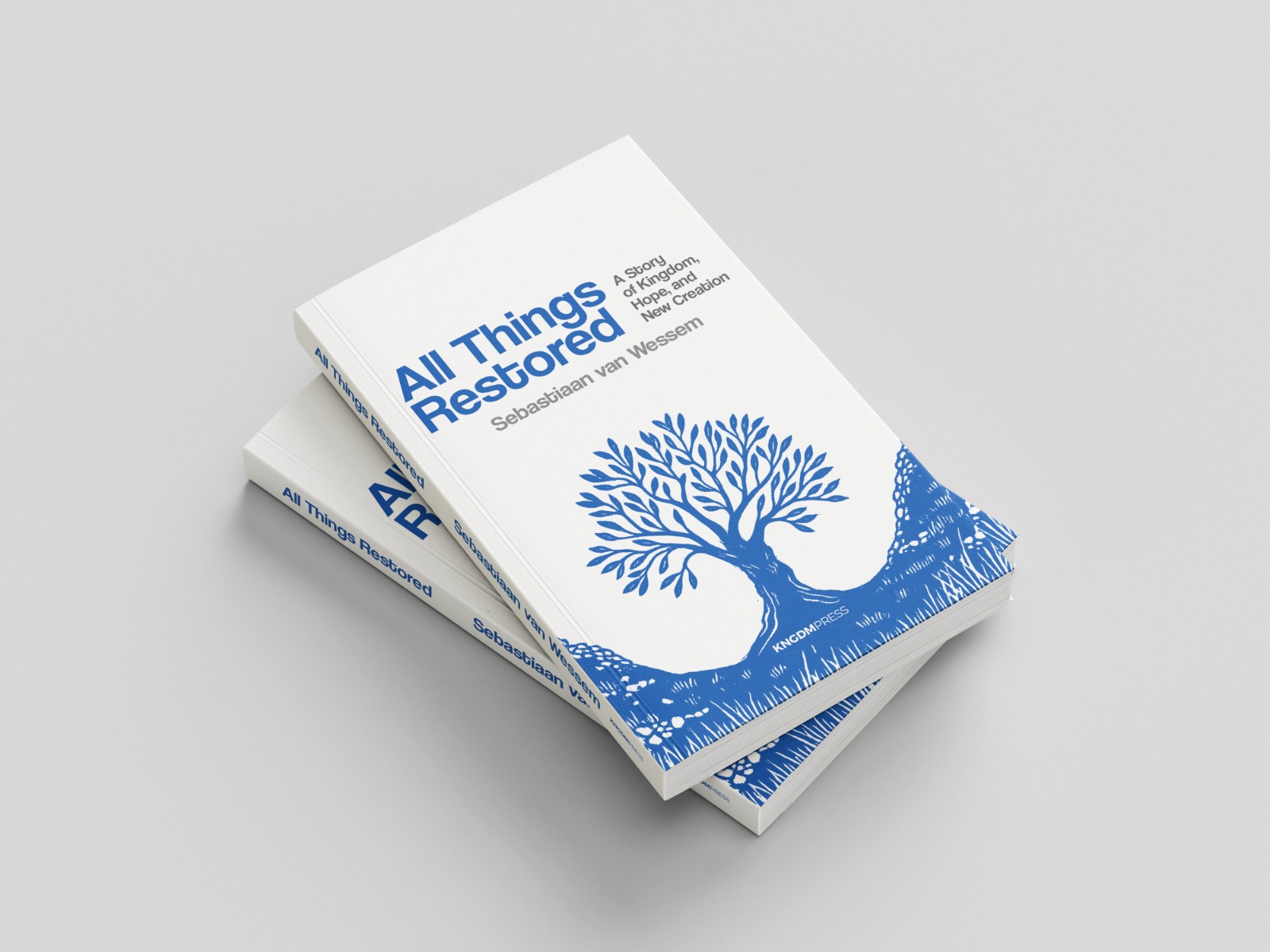
If you want to explore themes like this in further depth be sure to subscribe to my blog. Also, I am finishing up on a book called All Things Restored, which is supposed to come out in March in English and in May in Dutch. More language following!




Leave a Reply