“There he came to a cave and lodged in it. And behold, the word of the LORD came to him, and he said to him, ‘What are you doing here, Elijah?’”
(1 Kings 19:9 ESV)
Elijah’s story in 1 Kings 19 is one of the most honest and hope-filled moments in all of Scripture. Fresh off the dramatic victory on Mount Carmel — fire from heaven, the defeat of Baal, a nation stunned — Elijah suddenly collapses under fear, exhaustion, and despair. The prophet who had stood boldly before kings now sits beneath a broom tree, depressed and ready to die.
And yet, God was not finished with him.
Back to Mount Sinai, Back to Where Israel’s Story Began
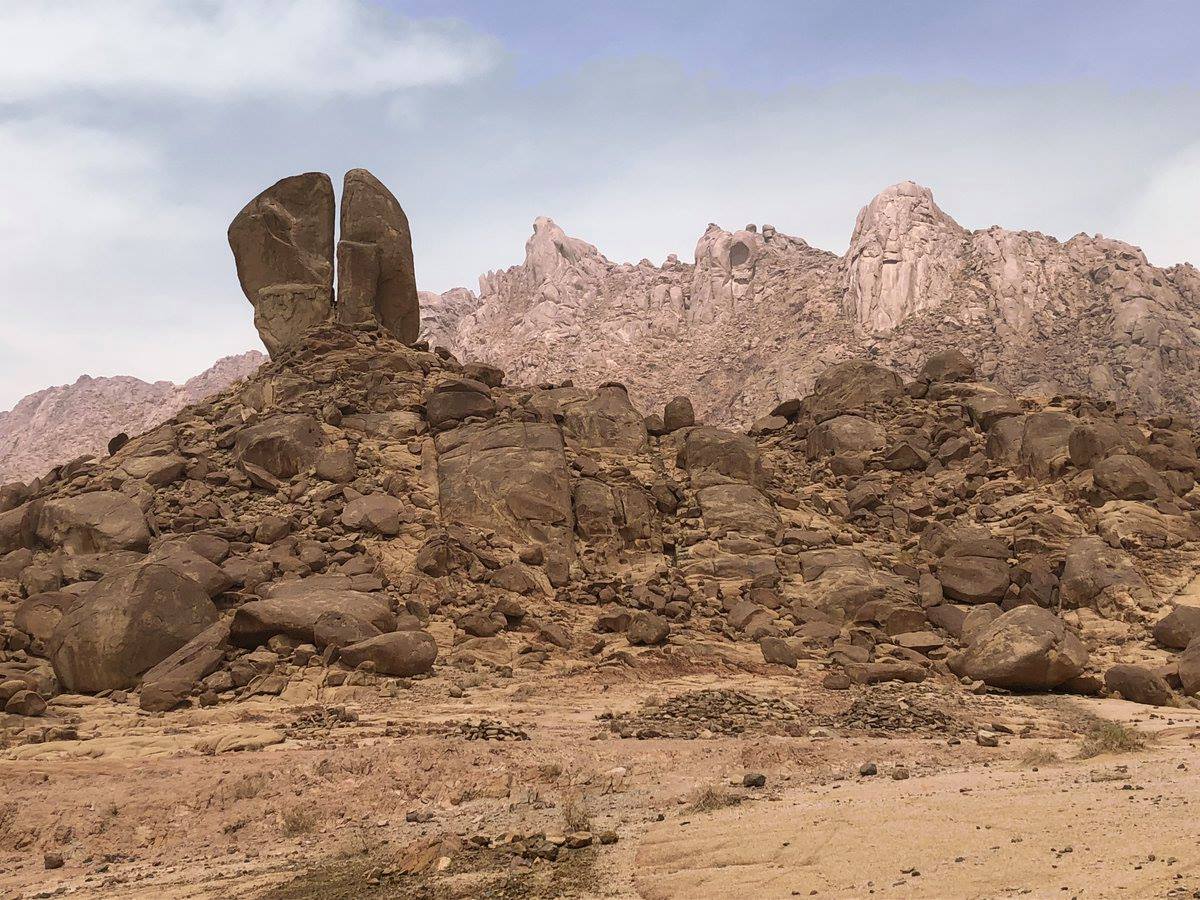
God meets Elijah, not with rebuke, but with care. He sends an angel with food and water. He strengthens him for a journey — not away from his calling, but back to the beginning of Israel’s story. Elijah travels to Mount Horeb, another name for Sinai, very likely located in present-day Saudi Arabia. This is the mountain where God formed Israel as his covenant people and gave them the Torah. When Elijah could no longer see a future, God brought him back to the place where the story of the nation of Israel first began.
And then something remarkable happens.

What — or Who — is the Word of the LORD?
Scripture says, “the word of the LORD came to him.” When I used to read verses like this, I thought that the recipient of “the word” heard an audible voice or so. But when you let the Old Testament interpret itself, you’ll notice that something far more personal and far more powerful is happening. In Genesis 15, “the word of the LORD” appears to someone else: to Israel’s patriarch Abraham in a tangible, visible form. Verse 5 (ESV) says that the word of the LORD “brought him outside” of his tent and then said to him, “Look toward heaven, and number the stars, if you are able to number them. … So shall your offspring be.”
The “word of the LORD” is not merely a sound, nor an idea, but God himself coming near. In 1 Samuel 3:21 you can see that the LORD reveals himself by the word of the LORD to the prophet Samuel: “And the LORD appeared again at Shiloh, for the LORD revealed himself to Samuel at Shiloh by the word of the LORD” (ESV). In other places in the Old Testament we can find out that the word of the LORD is the Angel of YHWH, who is YHWH himself appearing in a form that the human senses can process.
The early believers understood this. And John makes the connection explicit and identifies Jesus as the word of the LORD and thereby as the Angel of the LORD:
“In the beginning was the Word, and the Word was with God, and the Word was God… All things were made through him… In him was life, and the life was the light of men… And the Word became flesh and dwelt among us, and we have seen his glory.”
(John 1:1-4, 14 ESV)
John is telling us: the One who met Elijah in the cave is the same One who came to us in Bethlehem. When Elijah encountered the word of the LORD in the cave, he had an encounter with Jesus on Mount Sinai long before Christmas morning dawned.

The Heart of Advent
And this is the heart of Advent. Advent is the story of the Word who meets us in our caves. In our exhaustion. In our fear. In our disappointment. In our “I can’t do this anymore” moments.
Jesus does not wait for us to climb out. He steps in. He speaks. He restores. He sends us forward again with renewed purpose.
Elijah came to Sinai thinking his story was over. He left knowing God was still writing his story. It is no different with us.
This Advent, may you hear the gentle, persistent voice of the Word who became flesh — the One who meets you in your cave, the One who has walked the mountain before you, the One whose light still shines in the darkness, and the darkness has not overcome it.
The Word has come. The Word is here. And the Word meets you where you are.
Featured image: the split rock of Moses near Jabal Al-Lawz, which is believed to be the real Mount Sinai by a growing number of scholars. Photo by Joel Richardson.


Leave a Reply