Jacob wasn’t on a spiritual retreat. He was running for his life — leaving home, comfort, and every familiar landmark behind. Yet right there, in fear and uncertainty, heaven opened for him.
In the wilderness, God renewed the covenant he had cut with Abraham and Isaac. He promised Jacob what he promised his father and grandfather: land, descendants, and blessing for the nations. Jacob’s situation was unchanged, yet the revelation of God’s nearness transformed his entire reality.
When Jacob awoke, he whispered words that echo through Scripture:
“Surely the LORD is in this place, and I did not know it” (Genesis 28:16 ESV).

He set up a stone as a memorial and called the place Bethel (house of God). That stone, marking what felt like the end of his old life, became the beginning of God’s new work in him. Jacob vowed that the God who appeared to him would be his God. And in gratitude, long before Sinai’s laws, he pledged to give back a tenth of all God would provide (the tithe). It wasn’t commanded. It wasn’t duty. It was devotion — a heart awakened by grace.
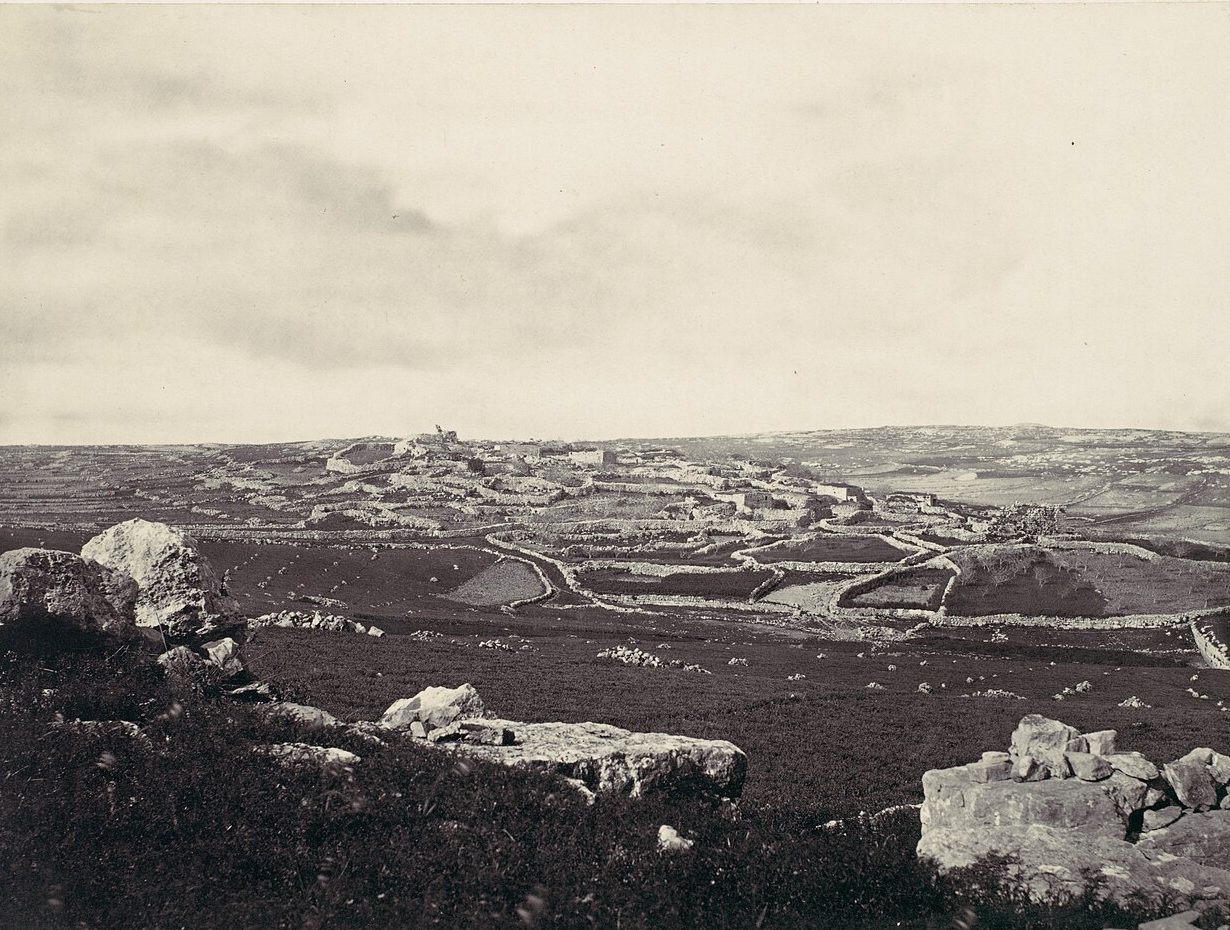
Centuries later, Bethel would become a sanctuary for generations, a reminder that God transforms our exile into a holy encounter.
And in Jesus, the true ladder between heaven and earth, the promise reaches its fullness. Heaven is open. The covenant is renewed. Every act of faith — every time we surrender, every prayer, every gift — becomes our declaration:
“This is the house of God.”
The same God who appeared to Jacob at Bethel has appeared to us in Jesus. His mercy toward us invites us to love him back. His generosity to us invites our allegiance even in our finances when we give our tithe back to him. It becomes a way of saying:
“Lord, you have my whole life.”
Featured image: the ruins of Bethel, the site of ancient Bethel, around 1857. Credit: Francis Frith / the Elisha Whittelsey Collection, The Elisha Whittelsey Fund, 1973.

Leave a Reply