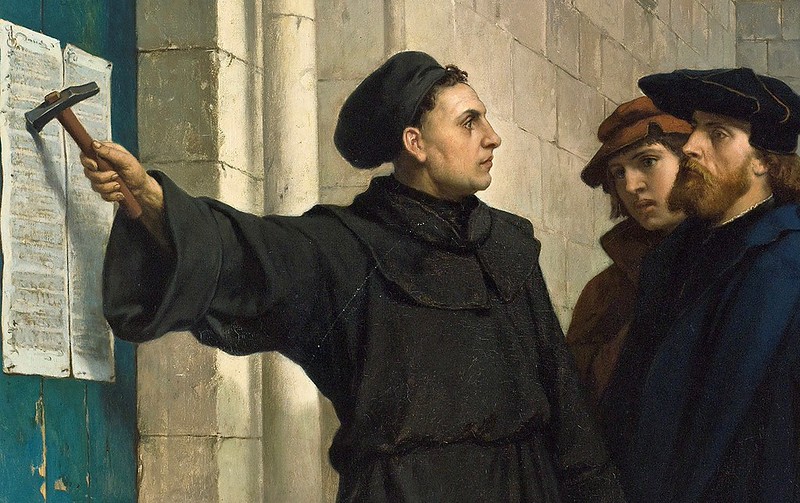
The Protestant Reformation sought to recover the heart of the gospel and to return to the faith of the early church. Yet while the Reformers corrected serious abuses, their renewal did not go far enough. Much of the Roman Catholic framework — its supersessionist view of Israel, its Greco-Latin categories of thought, and its separation of theology from the biblical story — remained intact.
What we need is not another reformation, but restoration: the renewal of God’s people into the fullness of the covenant purposes revealed from Genesis to Revelation. And that restoration can only be completed by the return of Jesus, the Messiah of Israel.

Before exploring each principle, it is worth recalling what the five solas represent. They were concise Latin phrases — Sola Scriptura (Scripture alone), Sola Fide (faith alone), Sola Gratia (grace alone), Solus Christus (Christ alone), and Soli Deo Gloria (to the glory of God alone) — that summarized the Reformers’ conviction that salvation and truth come from God’s initiative rather than human merit or ecclesial mediation. These affirmations were crucial in recovering biblical authority and gospel clarity. Yet, when isolated from the broader covenantal story of Scripture, they can unintentionally narrow the gospel’s scope and obscure God’s ongoing purpose for Israel and the nations.
1. Sola Scriptura — “Scripture Alone”
The Reformers reclaimed the Bible as the supreme authority over church tradition, yet their heirs often interpreted it through post-biblical lenses. Sola Scriptura was meant to anchor the church in God’s Word, but in practice it frequently led to fragmented and individualistic readings detached from Israel’s story.
The early believers read Scripture as one unfolding narrative of covenant and kingdom—rooted in Israel’s history and culminating in Messiah. Scripture’s authority is inseparable from that story. To read it faithfully is to read it as the living testimony of God’s covenant faithfulness to Israel and the nations (Rom.9:4-5; 11:17-24).

2. Sola Fide — “Faith Alone”
Faith alone rightly affirms that justification is a gift received, not achieved. Yet biblical faith (emunah, pistis) is not passive belief but covenantal loyalty. Abraham’s faith was credited as righteousness because he trusted God’s promise and obeyed his call (Gen.15:6; 22:18; Jas. 2:21-24).
Reducing faith to mental assent or private conviction strips it of its relational depth. True faith unites the believer to the Messiah and produces a life empowered by the Spirit — faith working through love (Gal.5:6). It restores people to covenant faithfulness, not merely to forensic status.
3. Sola Gratia — “Grace Alone”
Grace is not only unmerited favor but also divine empowerment. God’s grace chose Israel, not because of its greatness but because of his love and covenant mercy (Deut.7:7-8). Likewise, grace in Messiah both redeems and commissions.
When grace is reduced to a transaction of forgiveness, it loses its transformative intent. Grace calls the redeemed into participation in God’s mission of restoration. As Paul writes, “by the grace of God I am what I am, and his grace toward me was not in vain” (1 Cor.15:10). Grace restores us into bearing God’s image and empowers us to become more and more like him .
4. Solus Christus — “Christ Alone”
The Reformers proclaimed that salvation is found only through Christ’s finished work. Yet over time, Christus became abstracted from Messiah — the anointed King of Israel who fulfills the promises to Abraham and David.
To proclaim “Christ alone” faithfully is to proclaim Yeshua ha-Mashiach, the Jewish Messiah through whom the nations are grafted into Israel’s covenant (Rom.11:17). He is not the founder of a new religion but the fulfillment of Israel’s story, restoring Jews and Gentiles into one redeemed family (Eph.2:14-16). As Paul said: “There is one God, and there is one mediator between God and men, the man Christ Jesus.” (1 Tim.2:5)

5. Soli Deo Gloria — “To the Glory of God Alone”
God’s glory is the goal of creation and redemption. But that glory is not revealed in abstraction. It dwells among his people. From the tabernacle (Ex.40:34-35) to the incarnation (John 1:14) to the Spirit-filled community (Eph.2:21-22), God’s presence fills a restored people who bear his image in the world.
Living for God’s glory means embodying his character and purposes together. The ultimate Soli Deo Gloria will come when Messiah reigns from Zion and the earth is filled with the knowledge of the glory of the Lord (Hab.2:14; Isa.11:9).
Conclusion: From Reformation to Restoration
The Reformation reclaimed essential truths, but it did not restore the full biblical vision of God’s kingdom. It recovered sound doctrine — at least in part — but left the divide between Israel and the church unresolved, and failed to reunite spiritual truth with obedience lived out in daily life.
The next move of God will not be another reformation of structures or creeds. It will be a restoration of the people of God in covenantal fullness, empowered by the Spirit, and united under the returning King.
Only Jesus himself can bring that restoration in its fullness. Yet as we pray, “Your kingdom come, your will be done, on earth as it is in heaven” (Matt.6:10), we are called to participate in his work — pursuing unity in the body, proclaiming the gospel of the Kingdom, and living as a foretaste of the world to come.
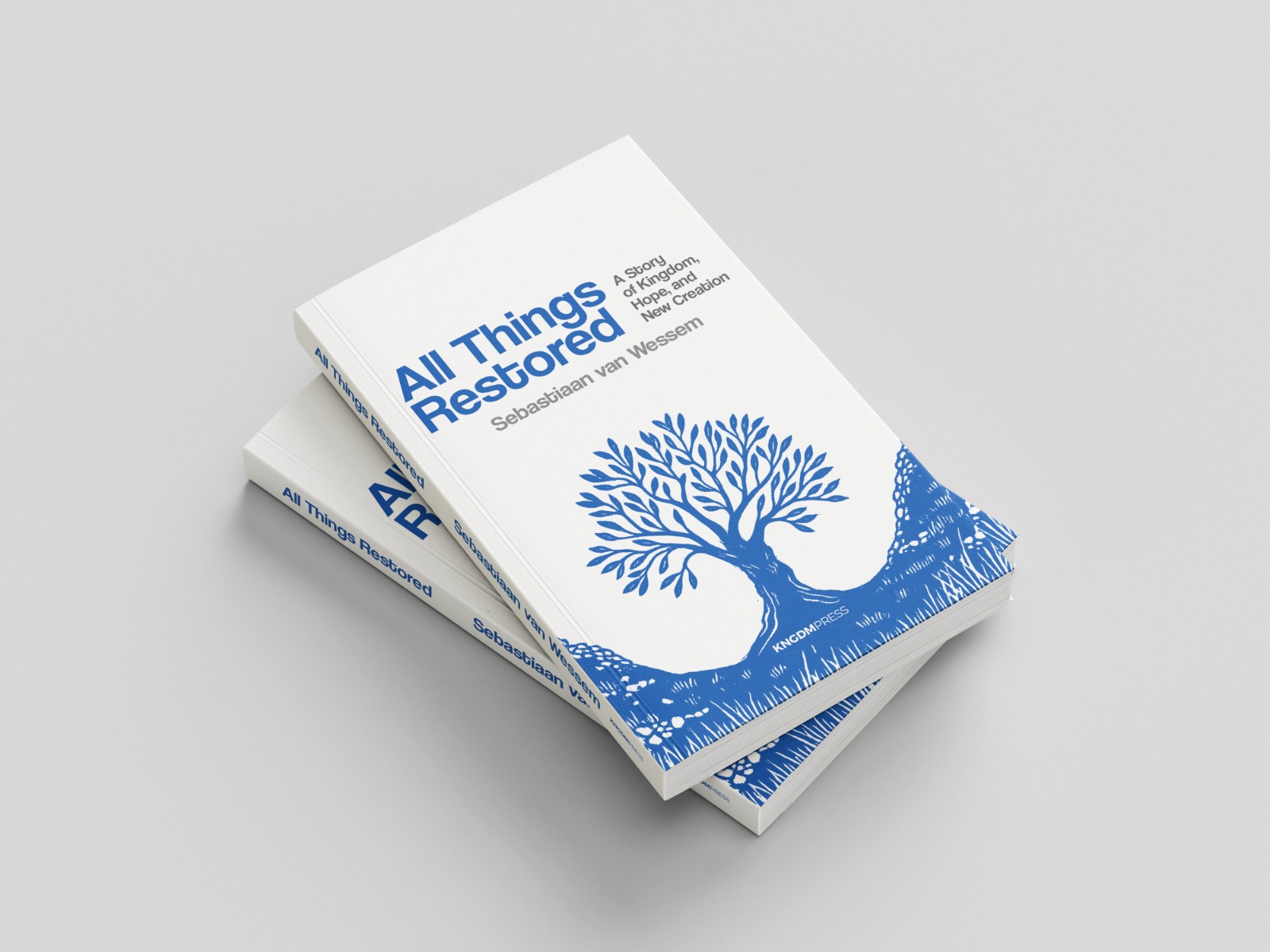
I am getting close to releasing details about my forthcoming book – All Things Restored – which will be my attempt to reach through Roman Catholic, Protestant and 21st Century filters, back to the faith and practices of the early church. Subscribe to my blog stay up-to-date!
Featured image: Luther hammers his 95 theses to the door by Ferdinand Willem Pauwels (1830-1903).


Leave a Reply