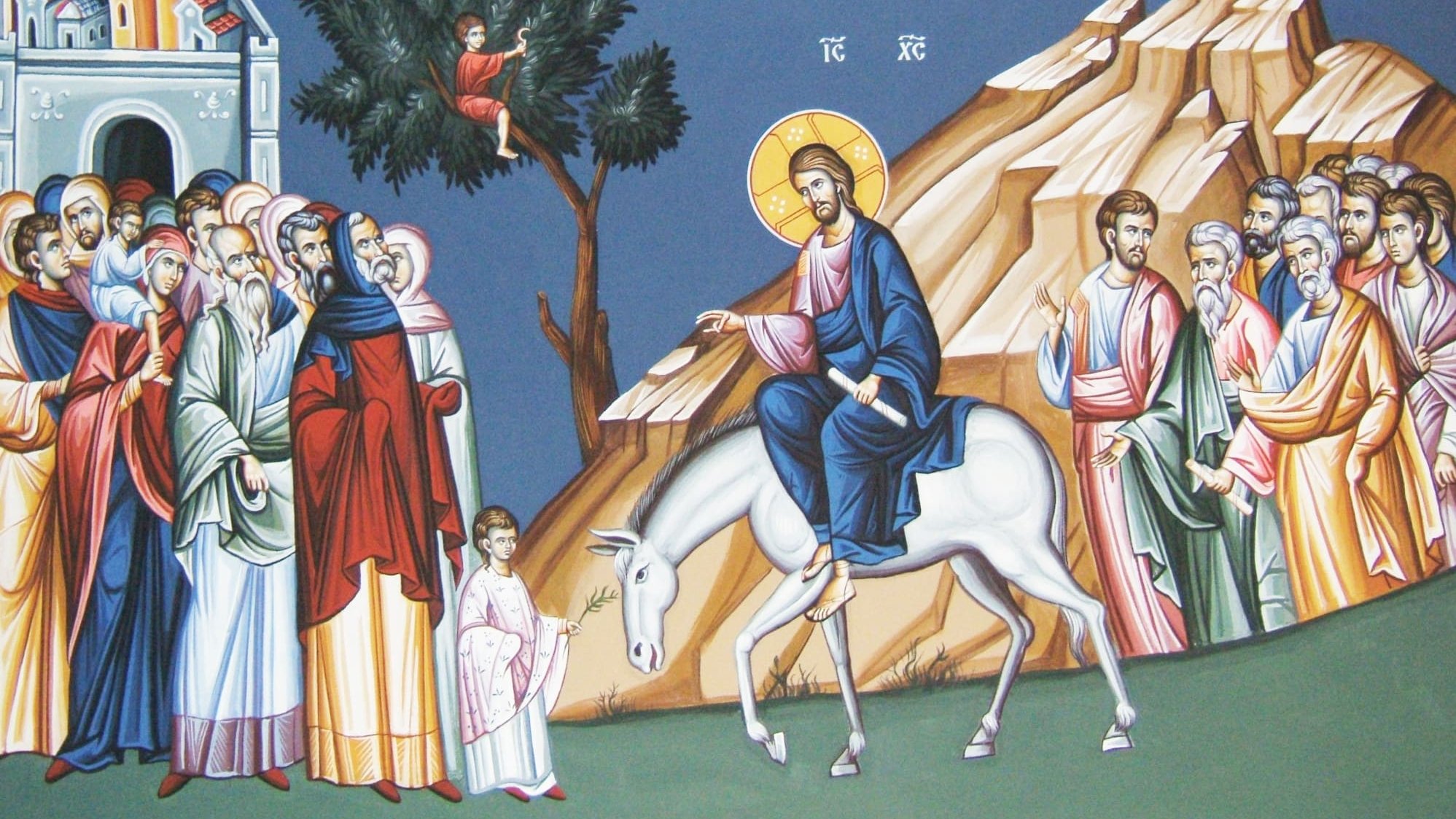
Today in most churches around the world we celebrate Palm Sunday. On the Christian calendar, it’s the Sunday before Good Friday and Easter. In the original holy week, on the Jewish calendar, Palm Sunday fell on Nisan 10. The Passover lamb would be slaughtered on Nisan 14 at twilight, which is on Thursday at sundown. On Nisan 15, the Jewish feast of Passover would start officially.

Why is Palm Sunday called Palm Sunday? “Palm” refers to the palm branches and leaves people were waving during Jesus’ triumphal entry into the city of Jerusalem. The people were excited that the One who many thought was the Messianic King was entering the city of Jerusalem. Could this be the moment when he would save the people of Israel from the Roman oppressor and set up his throne in Jerusalem, on Mount Zion?
But there was a different reason Jesus came into town. It was bittersweet. He knew that his death was near. He entered the city on Nisan 10, because this was “lamb selection Sunday.” Jesus knew he was entering the city as the perfect Lamb of God. He knew the he would die in the city as the perfect Lamb of God.
Lamb Selection Sunday
There are many verses in the New Testament that refer to Jesus as the Lamb of God. This is John the Baptizer, right before he would baptize Jesus:
“Behold, the Lamb of God, who takes away the sin of the world!”
(John 1:29 ESV)
In 1 Corinthians 5:7, after the resurrection, the Apostle Paul says this about Jesus:
Christ, our Passover lamb, has been sacrificed.
(1 Corinthians 5:7 ESV)
What is Passover?
So what is Passover? Passover is a weeklong feast that the Jews celebrate each year to remember that the LORD led their ancestors out of their slavery in Egypt, at least 3300 years ago. But before Passover started, there were some necessary preparations. I already mentioned that the Passover lamb had to be inspected on Nisan 10, to make sure there were no defects. Another thing was that the Jews would clean house microscopically so that there would not be any yeast in their homes. The days of unleavened bread would start soon!
The most important part of the Passover feast was a meal: the Passover meal, also referred to as the Passover Seder (seder is Hebrew for “order”). The original Passover meal was eaten by the Israelites the night before the tenth plague hit Egypt. This tenth plague was the most terrible. All the firstborn male children and male animals would be struck dead. The Israelites needed to smear some of the blood of the Passover lamb on their doorposts so the Angel of YHWH would not kill – pass over – their firstborn sons and firstborn male animals.
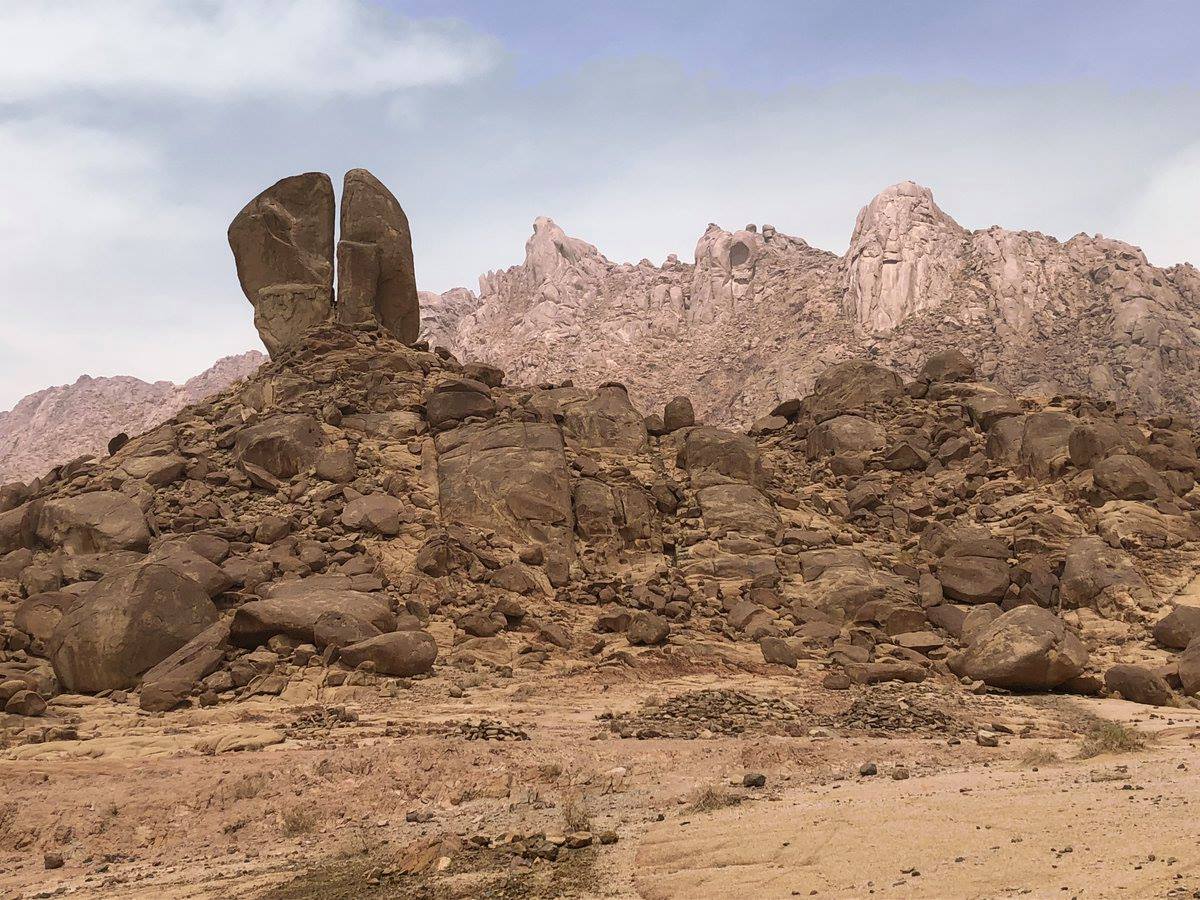
This Passover meal would be the last meal the Israelites would eat in Egypt, right before the exodus… right before God would split the Red Sea so they could walk on dry land, across to what is now called Saudi Arabia. I love this quote from the Mishna, which is an authoritative interpretation of Torah:
“Every person should read the Passover story as if he himself walked out of Egypt.”

Two Important Days in Holy Week
There are two important moments in the upcoming Holy Week the way it’s set up on the church calendar:
- Good Friday: we remember Jesus’ sacrifice, therefore you leave the church service in silence and darkness;
- Easter Sunday (I prefer to call it Resurrection Sunday): you come celebrating the risen King with great joy!
But today is Palm Sunday. One third of the gospels of Matthew, Mark and Luke takes place between Palm Sunday and Easter. In John’s Gospel it’s over 50%. This coming week is so important, so significant. It’s the center of gravity of all the four gospels.
Jesus is Inspected on Lamb Selection Sunday
Let’s go back to Palm Sunday, or “lamb selection Sunday”. In order to celebrate Passover, lots of Passover lambs were needed. Exodus 12:3 spells out that the sacrificial lambs needed to be inspected to see if they measured up to the standards. They needed to be without blemish.
That’s the very reason why Jesus entered the city of Jerusalem on the 10th day of the month of Nisan. He entered the city on this lamb selection Sunday. It is as if God is saying: “Here is the Lamb that I selected, the Lamb that I approve of!” And then on Passover, on the 14th Nisan, at twilight, the lamb had to be sacrificed. This was Thursday at sundown, according to Exodus 12:6.
Jesus entered the city on lamb selection Sunday so that the religious leaders, and everyone else, could inspect him! So, let’s look at the Biblical passage covering Jesus’ triumphal entry, which is at the heart of Christian tradition surrounding Palm Sunday.

The Triumphal Entry
1 Now when they drew near to Jerusalem and came to Bethphage, to the Mount of Olives, then Jesus sent two disciples, 2 saying to them, “Go into the village in front of you, and immediately you will find a donkey tied, and a colt with her. Untie them and bring them to me. 3 If anyone says anything to you, you shall say, ‘The Lord needs them,’ and he will send them at once.”
4 This took place to fulfill what was spoken by the prophet, saying,
5 “Say to the daughter of Zion, ‘Behold, your king is coming to you, humble,
and mounted on a donkey, on a colt, the foal of a beast of burden.’”
6 The disciples went and did as Jesus had directed them. 7 They brought the donkey and the colt and put on them their cloaks, and he sat on them. 8 Most of the crowd spread their cloaks on the road, and others cut branches from the trees and spread them on the road. 9 And the crowds that went before him and that followed him were shouting, “Hosanna to the Son of David! Blessed is he who comes in the name of the Lord! Hosanna in the highest!”
10 And when he entered Jerusalem, the whole city was stirred up, saying, “Who is this?” 11 And the crowds said, “This is the prophet Jesus, from Nazareth of Galilee.”
(Matthew 21:1-11 ESV)
Who Is This Jesus?
So who is this Jesus? Looking at the responses from the crowd, they didn’t seem to get the cues God was giving to show that Jesus is the ultimate and perfect Passover Lamb. They did, however, connect some other prophecies with Jesus’ life and ministry, and the way in which he entered the city of Jerusalem.
And that was deliberate on Jesus’ part. His triumphal entry fulfilled at least two prophecies regarding the Messianic King who would one day reign from Jerusalem, from Mount Zion. That’s what the crowds had in mind when they were shouting:
“Hosanna to the Son of David!
Blessed is he who comes in the name of the Lord!
Hosanna in the highest!”
(Matthew 21:9 ESV)
“Son of David” is a clear messianic title. But what made them think Jesus is Messiah? Here are two real obvious reasons straight from the Old Testament, straight from the Tanakh:
Reason #1: Jesus rides on a donkey in fulfillment of Zechariah 9:9:
Rejoice greatly, O daughter of Zion! Shout aloud, O daughter of Jerusalem!
Behold, your king is coming to you; righteous and having salvation is he,
humble and mounted on a donkey, on a colt, the foal of a donkey.
(Zechariah 9:9 ESV)
Reason #2: Jesus approaches Jerusalem from the Mount of Olives in fulfillment of Zechariah 14:4:
On that day his feet shall stand on the Mount of Olives
that lies before Jerusalem on the east.
(Zechariah 14:4 ESV)

Only Part of the Messianic Prophecies Will be Fulfilled
What would confuse the crowd eventually was that Jesus only fulfilled part of the prophecies in this chapter. Zechariah 14:3 shows that this Messiah, who is YHWH in the flesh, would fight against the nations that were oppressing Israel. But Jesus came in peace at his first coming! Besides that, the great and terrible war against Jerusalem that verse 2 describes had not yet started.
So the crowds were shouting: “Baruch haba b’shem Adonai” (blessed is he who comes in the name of the Lord), thinking Jesus would set them free from the Roman oppressor. But it wasn’t time for that yet. The final fulfillment of that cry for help to deliver Israel would come at the end of the great tribulation, otherwise referred to as the time of Jacob’s trouble. That is when Jesus will appear on the cloud, and once again set his foot on the Mount of Olives, and set Israel free once and for all.
The Day of YHWH
What the Jews believed in Jesus’ day was that there would be one Day of YHWH: Messiah would come, destroy Israel’s enemies, and set up his reign from Mount Zion. What Jesus kept reiterating was that he would come twice: the first time in grace, the second time in judgment over the nations. In his sermon in the synagogue in Nazareth, where he quoted Isaiah 61:1-2, he made that very clear (Luke 4).
When he came the first time, he inaugurated “the year of the Lord’s favor”. When he will return, he will bring on “the day of vengeance of our God”. In the following chapters in Matthew (esp.24-25), Jesus expands on what will happen when he returns.
Jesus Passed the Test
At his first coming, Jesus would have to die as the Lamb of God. All over the New Testament, we are reminded that Jesus wasn’t only “a” lamb of God, but the perfect Lamb of God. Pilate, the Roman governor of Judea, said:
“I find no guilt in this man.”
(Luke 23:4 ESV)
The apostle Peter reflects on Jesus’ death as the Lamb of God in his first epistle:
18 …you were ransomed from the futile ways inherited from your forefathers, not with perishable things such as silver or gold, 19 but with the precious blood of Christ, like that of a lamb without blemish or spot.
(1 Peter 1:18-19 ESV)
Jesus passed the test. Both Jew and gentile could see that he was the perfect Lamb of God!
Jesus Cleanses the Temple
But there was something else really remarkable that happened between the triumphal entry and Jesus’ death on the cross: Jesus cleansed the temple. This is the first thing he did after his triumphal entry.
12 And Jesus entered the temple and drove out all who sold and bought in the temple, and he overturned the tables of the money-changers and the seats of those who sold pigeons. 13 He said to them, “It is written, ‘My house shall be called a house of prayer,’ but you make it a den of robbers.”
(Matthew 21:12-13 ESV)
Was Jesus demonstrating by his actions that the lambs that were sold there were imperfect, and that the sacrificial system of Leviticus would be rendered obsolete this very Passover?
The perfect Lamb of God came into the temple… suddenly (Mal.3:1). He purged from it an oppressive sacrificial system that took advantage of ordinary people. By doing this, he also made room for the sick and for the Gentiles, who didn’t have any room in the temple anymore since the Court of the Gentiles was being used as a marketplace.
In Matthew 21:13 Jesus cites Isaiah 56:7:
…my house shall be called a house of prayer for all people.
(Isaiah 56:7 ESV)
The version of the story in Mark includes the “for all people” thought of Isaiah, which Matthew leaves out:
My house shall be called a house of prayer for all the nations.
(Mark 11:17 ESV)
By cleansing the temple, Jesus made room for those nations, but also for himself to do what is expected of Messiah! Here is what happens next:
14 And the blind and the lame came to him in the temple, and he healed them. 15 But when the chief priests and the scribes saw the wonderful things that he did, and the children crying out in the temple, “Hosanna to the Son of David!” they were indignant…
(Matthew 21:14-15 ESV)
Healing is one of the signs of the coming messianic age. That’s why Jesus supernaturally healed people! He did it for everyone to see! But only the children were ready to praise him for who he truly is, just like the crowds who welcomed him into the city right before. Jesus is the Messiah. Jesus is the promised Son of David!
And again that hosanna cry. Hosanna is not some alternative to happily shouting “hallelujah”. Hosanna (hoshi’a na = “save, please”) is a cry for help, in this case: a cry for help towards Messiah to set his people free!

Conclusion
Jesus made room for the sick and for the nations. Where? In his Father’s house, in the temple! We’re all welcome with God!
Reading the Palm Sunday story, I have three challenges for you and for myself:
Challenge #1: Receive the Kingdom like a child.
Only the children in the temple were ready to praise Jesus for who he really is. Are you and I ready to praise Jesus for who he is: Messianic King, Savior and God? I love this story:
14 “Let the children come to me; do not hinder them, for to such belongs the kingdom of God. 15 Truly, I say to you, whoever does not receive the kingdom of God like a child shall not enter it.”
(Mark 10:14-15 ESV)
Challenge #2: Allow Jesus to cleanse the temple of your heart, just like he cleansed the temple in Jerusalem.
I had to think of Psalm 24:3:
Who may ascend the mountain of the LORD?
Who may stand in his holy place?
(Psalm 24:3 NIV)
Challenge #3: Live like someone who’s been bought with a price by Jesus, the Passover Lamb.
19 Or do you not know that your body is a temple of the Holy Spirit within you, whom you have from God? You are not your own, 20 for you were bought with a price. So glorify God in your body.
(1 Corinthians 6:19-20 ESV)
Chag Pesach Sameach! Happy Passover!

Leave a Reply